

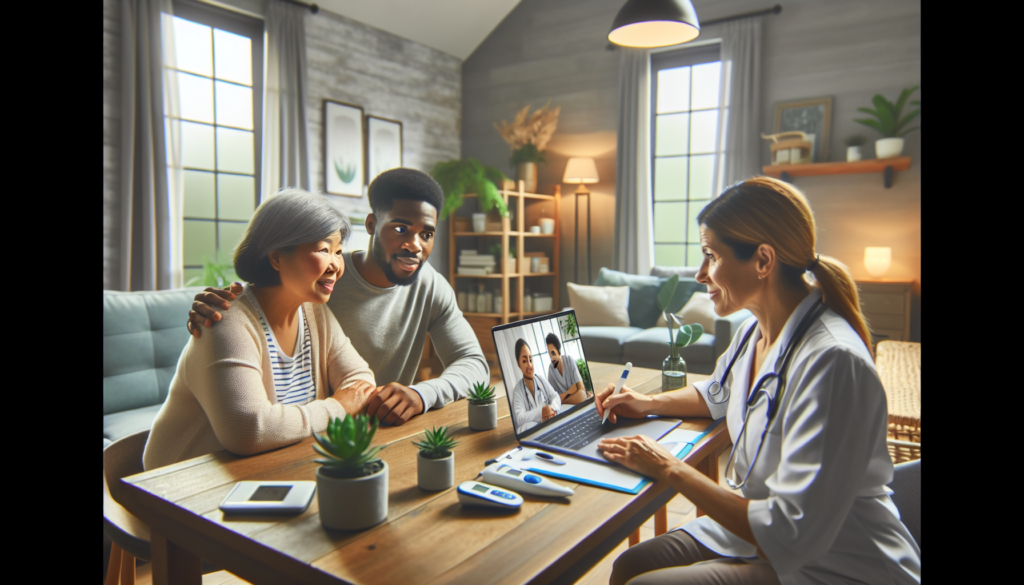
Remember the early days of the COVID-19 pandemic? Hospitals were overwhelmed. Clinics shut their doors. Millions of patients had no way to see their doctors in person. It was a frightening time — but out of that crisis came something remarkable: a digital healthcare revolution.
Now, years after the pandemic’s peak, the dust has begun to settle. And the big question is this: Did telemedicine stick around? Has it truly transformed healthcare, or was it just a temporary fix?
The answer, backed by emerging research, is clear: telemedicine is here to stay. More than that, it is evolving, expanding, and reshaping the very foundation of how we think about healthcare delivery. In this article, we explore the latest advancements in telemedicine in the post-pandemic era — who is using it, who is being left behind, and where the technology is headed next.
1. Telemedicine After COVID-19: A New Normal in Healthcare Delivery
The COVID-19 pandemic did not create telemedicine — it simply accelerated its adoption by decades. Before 2020, telemedicine was growing slowly. Regulatory barriers, reimbursement limitations, and patient skepticism kept it from reaching its full potential. Then the pandemic changed everything.
Governments relaxed regulations. Insurance companies expanded coverage. Patients who had never used a video call with a doctor were suddenly doing it every week. Healthcare systems that had no digital infrastructure scrambled to build one almost overnight.
But what happened after the lockdowns ended and the vaccines arrived? Did people go back to their old ways?
According to a nationally representative study published in Cureus (2026), which analyzed data from the National Health and Nutrition Examination Survey (NHANES) covering August 2021 to August 2023, approximately 32.46% of adults in the United States reported using telemedicine during that period. That translates to nearly one in three American adults actively using remote healthcare services — even in the post-pandemic phase.
Notably, the researchers acknowledged that telemedicine use appears to have declined slightly since the pandemic peak. However, they were quick to point out that this decline should not be misread as a retreat. Instead, it reflects a natural stabilization — telemedicine is no longer a crisis response. It is now a sustained and routine component of healthcare delivery.
Think about what that means. Something that barely existed for most people five years ago is now a regular part of how nearly a third of American adults access care. That is a seismic shift — and it is only the beginning.
2. Who Is Using Telemedicine — and Who Is Being Left Behind?
Telemedicine’s rise is exciting. But not everyone is benefiting equally. Understanding who uses telemedicine — and who does not — is critical to making sure this technology serves everyone, not just those who are already privileged.
The 2026 NHANES-based study shed important light on this issue. The researchers found several clear sociodemographic patterns in telemedicine adoption among U.S. adults.
Groups More Likely to Use Telemedicine
- Women: Female respondents were 47% more likely to use telemedicine than men (Adjusted Odds Ratio [AOR] = 1.47, 95% CI: 1.29–1.67). This aligns with broader trends showing that women tend to seek healthcare more proactively than men.
- Highly educated individuals: People with a college or associate degree were 58% more likely to use telemedicine (AOR = 1.58, 95% CI: 1.34–1.86). Those with even higher educational attainment were twice as likely (AOR = 2.02, 95% CI: 1.70–2.39). Digital literacy and confidence with technology likely play a major role here.
- People in poor general health: Individuals who rated their own health as poor were 66% more likely to use telemedicine (AOR = 1.66, 95% CI: 1.41–1.95). This makes intuitive sense — people with chronic conditions or serious illnesses need more frequent healthcare contact, and telemedicine offers a convenient way to get it.
Groups Less Likely to Use Telemedicine
- Uninsured individuals: People without health insurance were 63% less likely to use telemedicine (AOR = 0.37, 95% CI: 0.27–0.51). This is a striking and troubling finding. The people who often need healthcare most are among the least likely to access it — even through more affordable digital channels.
- People without a usual healthcare facility: Those who did not have a regular doctor or clinic they visited were 58% less likely to use telemedicine (AOR = 0.42, 95% CI: 0.33–0.54). This suggests that telemedicine, at least in its current form, tends to supplement existing care relationships rather than replace them for people with no healthcare access at all.
- Men: As noted, males were significantly less likely to use telemedicine compared to females.
These findings are a wake-up call. Telemedicine has enormous potential to reduce healthcare disparities — but only if we actively work to close these gaps. The researchers recommend that public health policies focus on promoting telemedicine use among men and improving digital literacy and accessibility for those with limited education or technology experience.
3. How Telemedicine Transformed Cancer Care During and After COVID-19
One of the most telling examples of telemedicine’s critical role during the pandemic comes from the field of oncology — specifically, gastric cancer care.
Cancer does not pause for a pandemic. But healthcare systems certainly did. A narrative review published in Life (2026) explored how COVID-19 disrupted gastric cancer care worldwide — and how digital health tools, including telemedicine, helped patch the gaps.
The findings were sobering. Elective endoscopy volumes — a key tool for detecting gastric cancer early — fell by up to 80% during the pandemic. The result? Diagnostic backlogs. An increased proportion of patients diagnosed at advanced stages. Delayed surgeries. Modified chemotherapy and radiotherapy schedules. Reduced molecular and genetic testing.
In short, cancer patients suffered enormously — not from COVID-19 itself, but from the collapse of routine cancer care that the pandemic triggered.
But here is where telemedicine played a crucial role. According to the same review, telemedicine was one of several innovations — alongside capsule endoscopy, updated vaccination strategies, and adaptive triage frameworks — that enabled a partial recovery of gastric cancer services during the pandemic.
Through telemedicine, oncologists could:
- Continue consultations with patients without requiring them to risk exposure in a hospital
- Monitor treatment side effects and medication adherence remotely
- Provide psychological support and survivorship counseling via video
- Coordinate care between multidisciplinary teams across different locations
The review also revealed important geographical disparities. Regions that already had established screening infrastructure recovered their gastric cancer services more quickly. Meanwhile, other regions — particularly those with less developed healthcare infrastructure — continued to experience delays and backlogs long after the acute phase of the pandemic had passed.
This highlights a critical lesson: digital health preparedness is not a luxury — it is a necessity for resilient healthcare systems. Countries and health systems that had invested in telemedicine and digital tools were better positioned to maintain cancer care continuity when physical access to care collapsed.
4. Digital Endpoints: The Next Frontier in Measuring Patient Health Remotely
Telemedicine is about more than just video calls with your doctor. The next wave of innovation involves something called digital endpoints — and they could fundamentally change how we measure and evaluate health outcomes.
So what exactly is a digital endpoint? According to a 2026 expert review published in Expert Review of Pharmacoeconomics & Outcomes Research, digital endpoints are defined by their use of sensor-generated data collected in non-clinical settings. In simpler terms, they are health measurements taken by digital devices — like your smartwatch, a mobile app, or a wearable patch — outside of a hospital or clinic.
Examples of digital endpoints highlighted in the review include:
- Smartphone-based diagnostics for cognitive impairment: Apps that can detect early signs of conditions like dementia or Alzheimer’s through voice analysis, reaction time tests, or behavioral patterns.
- Wearable devices measuring nocturnal activity in sickle cell disease patients: These devices can track how the disease affects a patient’s sleep and nighttime movements — data that would be nearly impossible to collect in a clinical setting.
These digital endpoints are being integrated into what is called Health Technology Assessment (HTA) — the systematic evaluation of the clinical and economic value of medical technologies. Traditionally, HTA relied on data from controlled clinical trials. But clinical trials capture only a snapshot of a patient’s health, usually in a controlled environment that does not reflect real life.
Digital endpoints change this. They provide a comprehensive, real-time view of patient health — how patients feel, function, and respond to treatment in their daily lives. This makes HTA far more precise and patient-centered.
The potential benefits are significant:
- Earlier diagnoses of conditions that might otherwise go undetected
- More accurate assessment of how diseases affect patients’ daily lives
- Cost reductions in drug discovery and clinical development
- More dynamic and responsive healthcare decision-making
However, the researchers are clear that integrating digital endpoints into HTA is not without challenges. Key concerns include:
- Data privacy: Who owns the data generated by your wearable? How is it protected?
- Standardization: Different devices measure things differently. Without common standards, it is hard to compare data across studies.
- Methodological validation: Digital measurements need to be proven accurate and reliable before they can be used in regulatory and reimbursement decisions.
5. Frameworks and Collaborations Shaping the Future of Digital Health
The good news is that the healthcare community is not sitting still. Researchers, regulators, and technology developers are actively working to build the frameworks needed to support responsible, effective digital health integration.
The 2026 expert review in Expert Review of Pharmacoeconomics & Outcomes Research highlights several promising initiatives:
The Digi-HTA Process
This is an emerging framework designed to guide health technology assessment specifically for digital health interventions. Unlike traditional HTA, which was built for drugs and medical devices, the Digi-HTA process is designed from the ground up to handle the unique characteristics of digital health tools — including their rapid pace of development, their reliance on real-world data, and their interaction with existing healthcare systems.
The Digital Endpoints Ecosystem and Protocols (DEEP)
DEEP is an initiative focused on standardizing how digital endpoints are developed, validated, and used in clinical research and HTA. By establishing common protocols, DEEP aims to ensure that digital health data is trustworthy, comparable, and usable across different healthcare systems and countries.
The authors of the review emphasize that these frameworks represent the future of digital health assessment — but they require collaborative efforts across healthcare, technology, and regulatory bodies to become reality. No single sector can do this alone.
For patients, this means that the telemedicine and digital health tools you use today are part of a much larger ecosystem being carefully evaluated and refined. Regulatory agencies, health economists, clinicians, and technology companies are all working together — sometimes for the first time — to ensure that digital health serves patients effectively and equitably.
This level of cross-sector collaboration is itself a post-pandemic phenomenon. The pandemic forced rapid, unprecedented cooperation between governments, healthcare systems, and technology companies. That spirit of collaboration, many experts hope, will continue to drive digital health innovation for years to come.
6. What the Future of Telemedicine Looks Like — and What Must Change
Based on the research we have explored, it is clear that telemedicine has moved firmly from “emergency response” to “standard of care.” But for it to truly fulfill its promise, several important changes still need to happen.
Closing the Digital Divide
The sociodemographic disparities identified in the NHANES study tell an important story. Telemedicine, in its current form, works best for people who are already educated, insured, and connected to the healthcare system. To reach its full potential, it must become accessible to everyone — including uninsured populations, older adults with limited digital skills, rural communities with poor internet connectivity, and men who are less likely to seek healthcare in the first place.
This will require targeted public health interventions, digital literacy programs, expanded insurance coverage for telehealth services, and a genuine commitment from policymakers to treat digital health equity as a priority.
Learning from the Cancer Care Crisis
The disruption to gastric cancer care during the pandemic is a cautionary tale with a clear moral: healthcare systems must build digital resilience before the next crisis hits. The lessons identified in the 2026 Life review — including digital health integration, flexible treatment protocols, and international collaboration — provide a conceptual model for oncologic resilience that applies far beyond cancer care.
Every healthcare specialty should be asking: “If we had to switch to remote care tomorrow, could we? And how would we make sure no one was left behind?”
Building Trust in Digital Health Data
For digital endpoints to transform HTA and healthcare decision-making, patients and clinicians need to trust them. That means investing in rigorous validation studies, robust data privacy protections, and transparent communication about how digital health data is being used.
The frameworks being developed — like Digi-HTA and DEEP — are steps in the right direction. But they need time, resources, and political will to reach their full potential.
Keeping the Patient at the Center
Perhaps the most important lesson from all of this research is simple: telemedicine works best when it is designed around the patient, not the technology. The goal is not to replace human connection in healthcare — it is to enhance it. A video consultation cannot replace the warmth of a doctor’s physical presence, but it can make that doctor accessible to someone who might otherwise have no access at all.
The future of telemedicine is not about gadgets and apps. It is about making healthcare more human, more accessible, and more equitable — for everyone, everywhere.
Conclusion
The COVID-19 pandemic was devastating. But it also forced the healthcare world to evolve at a pace that would have seemed impossible just a decade ago. Telemedicine went from a curiosity to a cornerstone of care. Digital endpoints emerged as a new way to measure health in real life. Cancer care systems adapted, stumbled, and learned. And researchers around the world began building the frameworks needed to sustain these changes for the long term.
Today, nearly one in three American adults uses telemedicine regularly. Healthcare systems that once dismissed video consultations as a novelty now regard them as essential. The conversation is no longer “Should we use telemedicine?” but rather “How do we make telemedicine work for everyone?”
That is the right question. And based on the research, the answers are coming. Slowly, imperfectly — but surely.
If you have not explored telemedicine for your own healthcare needs, now is a great time to start. And if you are a healthcare professional or policymaker reading this, the challenge is clear: the technology is ready. The question is whether our systems, policies, and commitments are ready too.
The future of healthcare is digital. And it starts right now.
References
- Mensah EA, Otuo AA, Twum-Damoah E, Peprah EY, Bronya NA, Jebiwot S, Aderinwale OA, Francis OS, Owusu DN. Sociodemographic Determinants of Telemedicine Uptake Among Adults in the United States. Cureus. 2026 Feb 20;18(2):e103972. doi: 10.7759/cureus.103972. eCollection 2026 Feb. PMCID: PMC13005991. PMID: 41873320.
- Vieru AM, Radulescu D, Streba L, Trasca ET, Cazacu SM, Statie RC, Popa P, Ciurea T. Learning from an Emerging Infection: How the COVID-19 Pandemic Reshaped Gastric Cancer Care. Life (Basel). 2026 Jan 19;16(1):161. doi: 10.3390/life16010161. PMCID: PMC12842618. PMID: 41598316.
- Chattu VK, Scaffeo A, Alla S, Sriraman H. How do we approach integrating digital endpoint studies into health technology assessment? Expert Rev Pharmacoecon Outcomes Res. 2026 Mar;26(3):317–324. doi: 10.1080/14737167.2026.2616382. Epub 2026 Jan 13. PMID: 41518641.