

Have you ever woken up in the morning with eyelids that feel sticky, crusty, or just plain irritated — like something has been bothering your eyes all night? You scrub it off, ignore it, and then it comes back the next day. And the day after that. If this sounds familiar, there is a good chance you have been dealing with blepharitis — one of the most common yet underdiagnosed eye conditions out there.
This article breaks everything down for you. Simple language, real explanations, no confusing medical jargon. Let’s get into it.
What is Blepharitis?
Blepharitis is simply an inflammation of the eyelid margins — the edges of your eyelids where your eyelashes grow. Think of it like dandruff, but for your eyelids. The skin gets flaky, irritated, and red. It can affect one eye or both, and it tends to be a long-term, recurring problem rather than something that just comes and goes once.
It is surprisingly common. Studies suggest that blepharitis accounts for roughly 5% of all eye-related complaints seen by eye doctors, and some reports estimate that up to 47% of patients presenting to ophthalmology clinics show signs of it. It affects people of all ages, but it tends to be more common as people get older. According to a 2026 review published in Frontiers in Medicine, blepharitis is one of the most prevalent ocular surface diseases globally, often leading to serious complications like dry eye syndrome and corneal damage if left untreated.
How Does It Occur? (Pathophysiology)
So what actually happens inside the eyelid to cause all this irritation? Here is where it gets a little interesting.
Your eyelids have tiny glands called meibomian glands — they produce the oily layer of your tear film that stops your tears from evaporating too quickly. When the eyelid margin becomes inflamed, these glands get blocked. Oil builds up. Bacteria start to thrive in that warm, oily environment. The body’s immune system kicks in, trying to fight off the infection — and in doing so, causes more redness, swelling, and irritation.
On top of that, research now points to microbiome dysbiosis — a fancy term for when the natural balance of microorganisms on your eyelid skin goes out of whack. Bacteria like Staphylococcus aureus overgrow and produce toxic substances that damage the eyelid tissue. Tiny mites called Demodex (yes, mites that live on human skin) can also infest the eyelash follicles and trigger a significant inflammatory response. These are not just innocent bystanders — they actively contribute to the disease process.
What Are the Causes of Blepharitis?
Blepharitis does not usually have just one cause. More often, it is a combination of factors — bacterial overgrowth, skin conditions, mite infestations, and even your daily habits. Understanding what is driving the inflammation in your specific case is actually the key to treating it effectively. Here are the main causes:
- Staphylococcal Infection (Anterior Blepharitis)Staphylococcus aureus is considered the most common bacterial cause and is responsible for a significant portion of anterior blepharitis cases. It colonises the eyelid margins and releases toxins that trigger inflammation, cause crusting around the lashes, and can even lead to small ulcerations over time.
- Demodex Mite InfestationDemodex folliculorum and Demodex brevis are microscopic mites that normally live in hair follicles and skin glands. Studies suggest that Demodex blepharitis affects an estimated 25–47% of symptomatic blepharitis patients, with prevalence increasing with age — some reports show infestation rates of over 80% in patients above 60 years old. They cause collarettes (cylindrical dandruff-like sleeves around lashes) which are considered a pathognomonic sign, meaning it is almost exclusively seen with this type.
- Seborrhoeic DermatitisThis is a chronic skin condition that causes flaking and oily skin, especially around the scalp, eyebrows, and — yes — the eyelids. When seborrhoeic dermatitis affects the eyelids, it leads to the posterior or mixed form of blepharitis with greasy scales rather than hard crusts.
- Meibomian Gland Dysfunction (MGD)MGD is perhaps the most common underlying cause of posterior blepharitis, affecting the glands that line the inner edge of the eyelid. When these glands become blocked or produce abnormal secretions, the tear film becomes unstable, leading to chronic inflammation and dry eye.
- Allergic Reactions and Contact DermatitisCosmetics, eye drops, contact lens solutions, and even certain medications can trigger eyelid inflammation. This type tends to be more acute but can become chronic if exposure continues.
- Rosacea-Associated BlepharitisPeople with rosacea — a skin condition causing facial redness — frequently develop ocular involvement, including blepharitis. It is estimated that up to 58% of rosacea patients have some form of ocular manifestation.
Risk Factors
Not everyone who encounters bacteria or mites will develop blepharitis. So, who is most at risk? Certain individuals are simply more predisposed — whether due to age, lifestyle, pre-existing conditions, or even their hygiene routine. Being aware of these risk factors is the first step to protecting yourself or catching the condition early.
- Older age — Demodex mite colonisation and meibomian gland dysfunction both increase significantly with age, making the elderly a high-risk group.
- Pre-existing skin conditions — Rosacea, seborrhoeic dermatitis, and eczema all increase susceptibility.
- Contact lens wearers — Disrupts the normal eyelid microbiome and increases bacterial load.
- Poor eyelid hygiene — Infrequent cleaning of the eyelid margins allows debris and organisms to accumulate.
- Hormonal changes — Particularly in menopausal women, hormonal shifts affect meibomian gland function.
- Systemic medications — Isotretinoin (used for acne) has been associated with eyelid inflammation and even corneal complications, as highlighted in a recent 2026 case report in Archivos de la Sociedad Española de Oftalmología.
- Immunocompromised states — Conditions like HIV or diabetes reduce the body’s ability to control bacterial overgrowth on the skin.
- Heavy eye makeup use — Especially if not properly removed, this creates a breeding ground for bacteria and mites.
Symptoms of Blepharitis
The symptoms of blepharitis can range from mildly annoying to genuinely distressing. And because they overlap with so many other eye conditions, it is easy to mistake it for something else. Here is what to watch for:
- Redness and swelling of the eyelid margins — The most visible sign. The inflamed glands and blood vessel dilation cause the classic red-rimmed eyelid appearance.
- Crusty or flaky debris at the base of the eyelashes — Often worse in the morning. In Demodex blepharitis, these appear as cylindrical collarettes around the lash base.
- Itching and burning sensation — Caused by bacterial toxins and immune cell activity at the eyelid margin.
- Gritty or foreign body sensation — Feels like there is sand in your eye. This occurs because the unstable tear film and debris irritate the corneal surface.
- Watery eyes or dry eyes — Paradoxically, blepharitis can cause both. MGD disrupts the oily tear layer, leading to rapid tear evaporation and reflex tearing.
- Sensitivity to light (photophobia) — Corneal involvement or severe dry eye can cause light sensitivity.
- Blurred vision — Usually intermittent and related to tear film instability rather than structural eye damage.
- Loss of eyelashes (madarosis) — Seen in severe, long-standing cases where chronic inflammation damages the follicles.
Differential Diagnosis
Here is the tricky part — several other eye conditions can look almost identical to blepharitis, at least on the surface. Red, irritated eyelids with crusty discharge? That description fits more than one diagnosis. Getting it right matters, because the treatment can be quite different. A careful examination is essential before jumping to conclusions.
- Conjunctivitis (Pink Eye)Both cause red, irritated eyes with discharge. However, conjunctivitis primarily affects the conjunctiva (the white of the eye) rather than the eyelid margin. Bacterial conjunctivitis tends to have more copious purulent discharge, while blepharitis discharge is more crusty and confined to the lash line.
- Dry Eye Disease (DED)Very closely related — in fact, blepharitis and dry eye often coexist. Dry eye alone does not cause eyelid margin inflammation or lash crusting, which are the hallmarks of blepharitis.
- Hordeolum (Stye)A stye is a localised acute infection of an eyelash follicle or gland. Unlike blepharitis, it presents as a painful, well-defined lump rather than diffuse eyelid margin inflammation.
- ChalazionA non-infectious, chronic granulomatous blockage of a meibomian gland. It presents as a painless nodule within the eyelid. Importantly, chronic blepharitis can predispose patients to recurrent chalazia.
- Ocular RosaceaOften coexists with blepharitis but also presents independently with telangiectasia (dilated blood vessels) on the eyelid margins and facial rosacea.
How to Diagnose Blepharitis?
The good news? Blepharitis is largely a clinical diagnosis — meaning a well-trained eye doctor can usually identify it through examination alone, without needing lots of tests.
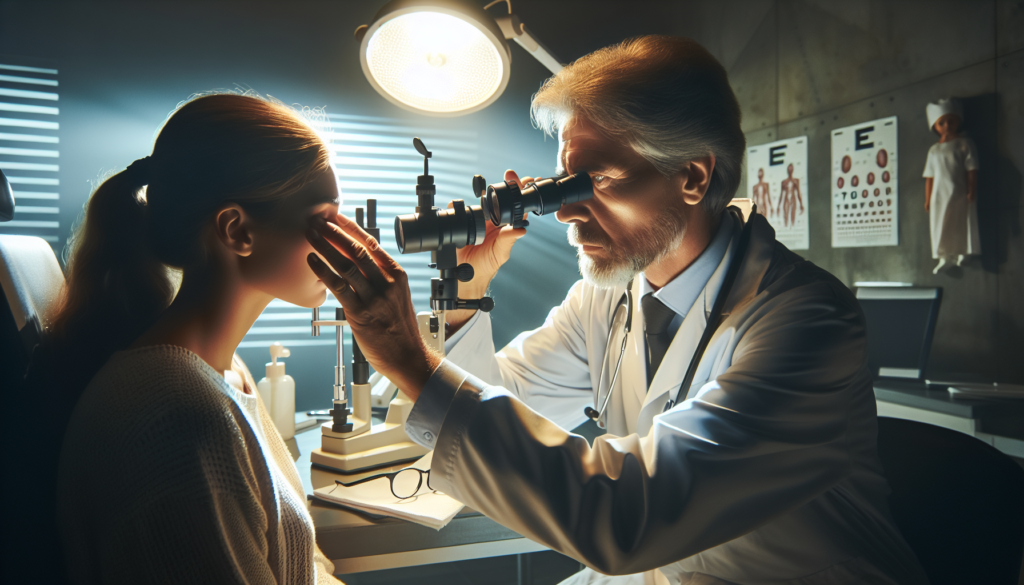
The gold standard investigation is a detailed slit-lamp biomicroscopy examination. Here is how it works:
The patient sits in front of a slit lamp — an instrument that combines a high-powered microscope with a narrow beam of intense light. The doctor examines the eyelid margins, eyelashes, meibomian gland openings, and conjunctiva in detail. They look for:
- Collarettes or cylindrical dandruff at the lash base (Demodex)
- Lid margin thickening, redness, or vascularisation
- Meibomian gland plugging or abnormal secretions
- Tear film quality and breakup time
In cases where Demodex is suspected, an epilated eyelash examination under microscopy can confirm the presence of mites. Additional tests include meibography (imaging of the meibomian glands using infrared light) and tear film osmolarity testing. Optical coherence tomography (OCT) may also be used when corneal involvement is suspected.
Treatment of Blepharitis
Here is the honest truth about treating blepharitis — there is no quick cure. Because it is a chronic condition, treatment is more about managing it consistently rather than eliminating it once and for all. The good news is that with the right approach, most people can keep it well under control and get real, lasting relief.
Gold Standard Treatment: Eyelid Hygiene
The cornerstone of treatment — regardless of the type of blepharitis — is regular eyelid hygiene. This means:
- Warm compresses: Apply a warm, damp cloth to closed eyelids for 5–10 minutes. The heat softens the blocked meibomian gland secretions so they can drain properly.
- Eyelid scrubs: Using a gentle eyelid cleanser, cotton pad, or specific lid wipes, clean along the lash line to remove crusts, debris, and bacterial biofilm. Done twice daily initially, then once daily for maintenance.
- Lid massage: After warm compresses, gently massaging the eyelids helps express blocked meibomian gland secretions.
Antibiotic Therapy
When bacterial involvement (particularly Staphylococcus) is confirmed or suspected, topical antibiotics such as azithromycin or bacitracin ointment are applied directly to the eyelid margin. For more severe cases, oral doxycycline or azithromycin may be prescribed — these also have anti-inflammatory effects beyond their antibiotic action.
Treatment for Demodex Blepharitis
This one requires specific treatment. Lotilaner ophthalmic solution 0.25% (Xdemvy®) is currently the only FDA-approved treatment specifically for Demodex blepharitis. A 2026 case report in SAGE Open Medical Case Reports demonstrated that patients treated with lotilaner, combined with lid scrubs and warm compresses, showed complete resolution of collarettes within two months. The Demodex Expert Panel has established it as the preferred first-line agent for this specific type. Tea tree oil-based eyelid cleansers (containing terpinen-4-ol) are also used as adjuncts to reduce mite load.
Anti-Inflammatory Treatment
When inflammation is significant, short-term topical corticosteroid eye drops (e.g., loteprednol) can provide relief — but they are used cautiously due to the risk of raised eye pressure with prolonged use. Cyclosporin A eye drops are another option for chronic cases with significant dry eye involvement.
Artificial Tears and Lubricants
Because blepharitis frequently disrupts the tear film, preservative-free artificial tear drops are recommended regularly to keep the eye surface moist and comfortable.
Treating Underlying Conditions
If rosacea, seborrhoeic dermatitis, or other skin conditions are contributing, treating the underlying condition is essential. This might involve dermatology co-management alongside ophthalmology.
The take-home message? Start with hygiene, stay consistent, and escalate treatment based on the specific type and severity. Most people respond well — but only if they stick with it.
References
- Zhu M, Sun C, Zhang Y, Na Y, Wang Y, Zhao Q, Gu Y. Blepharitis driven by microbiome dysbiosis and Demodex infestation: possible pathogenic mechanisms. Front Med (Lausanne). 2026 Apr 15;13:1801375. doi: 10.3389/fmed.2026.1801375. PMID: 42063777.
- Karpecki P, Ayres B, Donnenfeld E, et al. Lotilaner ophthalmic solution 0.25% in the treatment of Demodex blepharitis: A case report. SAGE Open Med Case Rep. 2026 Apr 20;14:2050313X261443128. doi: 10.1177/2050313X261443128. PMID: 42046820.
- Martínez Serna V, Navarro Torres P, Romero Titos A. Systemic isotretinoin-associated Salzmann-like nodular degeneration in a young adult. Arch Soc Esp Oftalmol (Engl Ed). 2026 Apr 16:502563. doi: 10.1016/j.oftale.2026.502563. PMID: 42000035.
- Amescua G, Akpek EK, Farid M, et al. Blepharitis Preferred Practice Pattern®. Ophthalmology. 2019 Jan;126(1):P56–P93. doi: 10.1016/j.ophtha.2018.10.019.
- Putnam CM. Diagnosis and management of blepharitis: an optometrist’s perspective. Clin Optom (Auckl). 2016 Oct 14;8:71–78. doi: 10.2147/OPTO.S84795. PMID: 30881191.
- Stapleton F, Alves M, Bunya VY, et al. TFOS DEWS II Epidemiology Report. Ocul Surf. 2017 Jul;15(3):334–365. doi: 10.1016/j.jtos.2017.05.003. PMID: 28736337.
- Fromstein SR, Harthan JS, Patel J, Opitz DL. Demodex blepharitis: clinical perspectives. Clin Optom (Auckl). 2018 Jul 5;10:57–63. doi: 10.2147/OPTO.S142708. PMID: 30214346.
- Geerling G, Tauber J, Baudouin C, et al. The international workshop on meibomian gland dysfunction: report of the subcommittee on management and treatment of meibomian gland dysfunction. Invest Ophthalmol Vis Sci. 2011 Mar 30;52(4):2050–2064. doi: 10.1167/iovs.10-6997g. PMID: 21450919.