

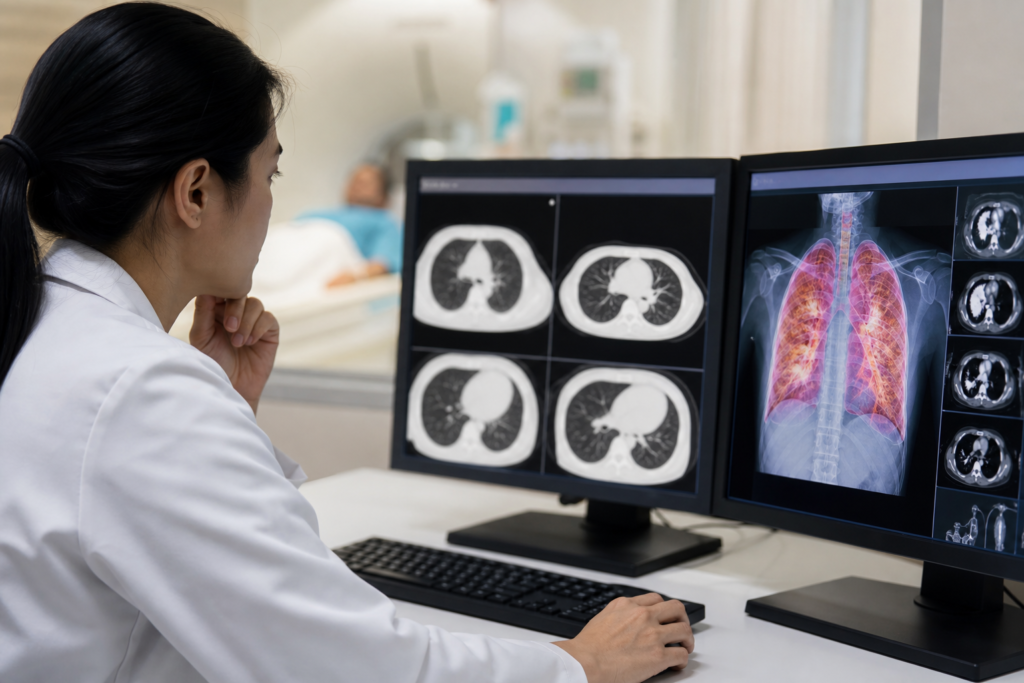
Medical News & Research Update
AI in Cancer Detection: Enhancing Early Diagnosis and Treatment
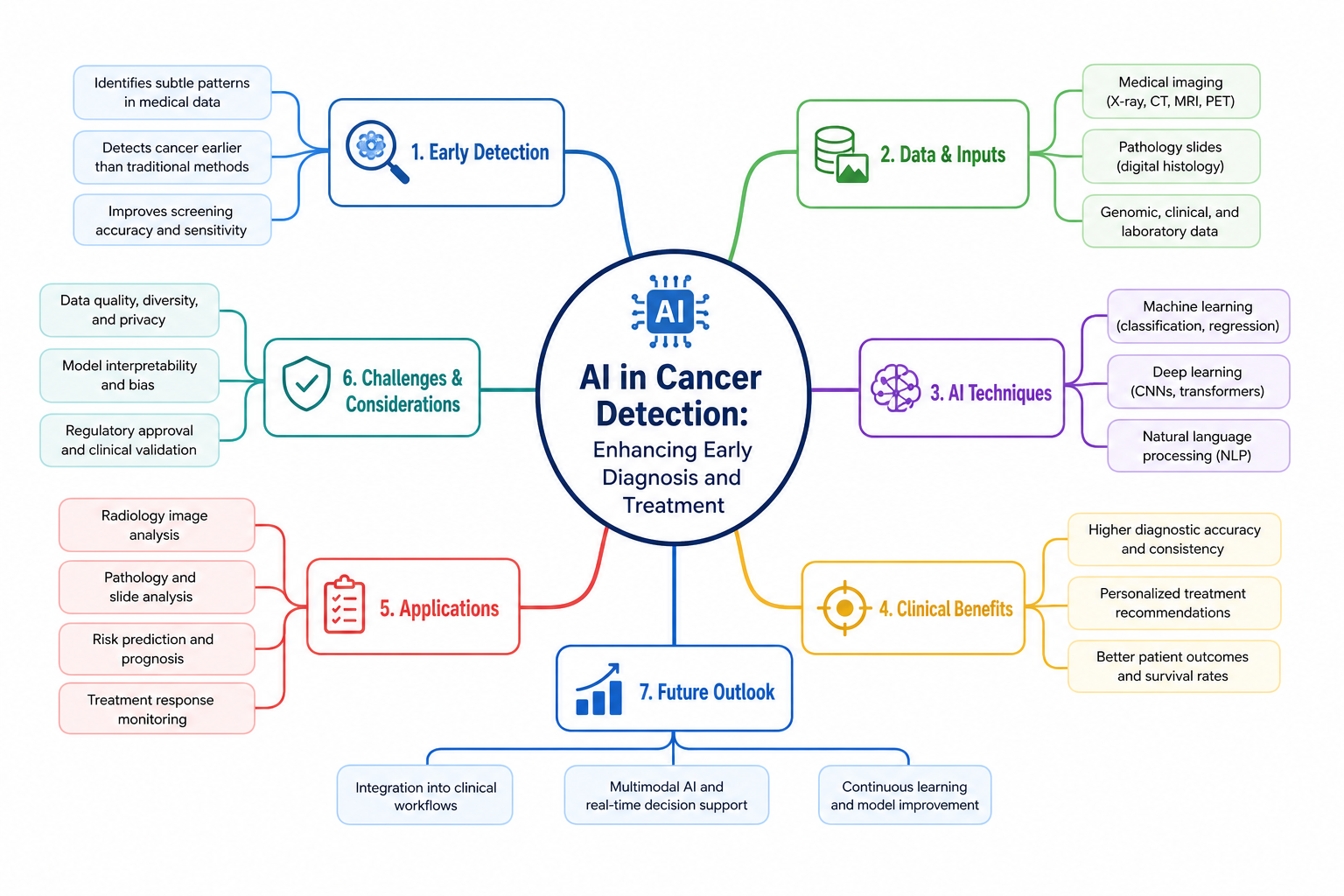
Artificial intelligence is changing how doctors find and treat cancer — potentially spotting problems earlier than traditional methods alone in some settings. Here is what the available evidence and regulatory analysis tell us, explained in plain language.
Cancer remains one of the leading causes of death worldwide, and early detection is widely recognised as an important tool for improving survival. In recent years, artificial intelligence (AI) — particularly a branch called machine learning — has moved from research laboratories into some real clinical settings, helping radiologists read scans, pathologists analyse tissue, and oncologists plan treatment. The potential is notable: AI systems can process large amounts of image data rapidly and may flag abnormalities that could otherwise be missed, particularly during high-volume clinical workflows. However, the clinical evidence base for AI in cancer detection is still developing, and results vary considerably depending on the cancer type, clinical setting, and AI system evaluated.
At the same time, AI in medicine is not a simple plug-and-play solution. Regulatory bodies in both Europe and the United States are actively working out how to oversee AI tools safely, how to monitor them after they are deployed in hospitals, and how to make sure they continue to perform well as clinical conditions change over time. A 2026 legal analysis published in Abdominal Radiology examined exactly this challenge, using prostate cancer radiology as a detailed case study.[4] The findings reveal important gaps between what existing regulations require and what safe AI use in cancer care may demand.
Key Facts at a Glance
- Regulatory oversight is evolving: In Europe, both the AI Act and the Medical Device Regulation (MDR) apply to AI tools used in cancer imaging, but their requirements do not always align.[4]
- Prostate cancer AI is a leading regulatory test case: High-risk AI software for prostate cancer radiology was used as a detailed example to map where regulations overlap or leave gaps.[4]
- Nutrition matters alongside technology: European expert guidelines emphasise that all cancer patients should be screened early for nutritional risk, regardless of body weight — a human care element AI cannot replace.[8]
- Human oversight remains essential: Both regulators and clinicians stress that AI tools must be monitored continuously by trained healthcare professionals, not left to run without review.[4]
In This Article
Background: Why AI and Cancer?
Finding cancer early — before it has spread — is generally associated with improved chances of successful treatment. For many cancers, earlier-stage disease may be more amenable to curative treatment, while later-stage disease is often more difficult to manage. Traditional detection relies on doctors reading X-rays, MRI scans, CT scans, biopsies, and blood tests. These are highly skilled tasks, but human performance can be affected by fatigue, workload, and the sheer volume of images that modern medicine generates.
AI — and particularly a technique called deep learning — has shown an ability to analyse medical images at speed and, in some specific research settings and for particular tasks, to perform comparably to human specialists. For example, AI tools have been developed and studied for detecting suspicious lesions on mammograms, identifying prostate cancer on MRI, finding polyps during colonoscopy, and classifying skin lesions from photographs. The clinical significance of these findings and their generalisability across different healthcare settings remain subjects of ongoing investigation.
Beyond detection, AI is also being explored for predicting treatment response and identifying patients who may benefit from particular therapies. In oncology, where treatment decisions can be complex and highly individualised, these tools offer potential to support — though not replace — clinical judgement. Evidence supporting specific clinical benefits varies widely and should be evaluated on a tool-by-tool, context-specific basis.
AI tools used in medical diagnosis are classified as Software as a Medical Device (SaMD) — meaning they are subject to medical device regulations. This brings them under strict requirements for safety, performance monitoring, and post-market surveillance. Getting this regulatory framework right is essential to ensure patient safety.
New Evidence: What the Research Shows
Regulatory Mapping: The AI Act and Medical Device Regulation
A 2026 study published in Abdominal Radiology conducted a detailed legal analysis of how two major European frameworks — the EU Artificial Intelligence Act (AIA) and the EU Medical Device Regulation (MDR) — apply to high-risk AI tools used in cancer radiology.[4] The researchers used a hypothetical but realistic case study: a Class III (high-risk) AI system for detecting prostate cancer on MRI scans.
Their analysis organised post-market obligations — that is, the rules that apply after a device is approved and in clinical use — into ten categories. They found both areas of convergence (where both regulations require similar things) and divergence (where one regulation has requirements the other lacks, creating potential gaps).
Key Findings from the Regulatory Analysis[4]
- Convergence: Both the AIA and MDR require continuous performance monitoring and documentation throughout the AI tool’s lifecycle. This means manufacturers cannot simply deploy a tool and walk away — they must track how it performs in real clinical settings over time.
- Divergence on human oversight: The AIA places specific requirements on human oversight of AI decisions, but the MDR does not address this in the same way. This leaves a gap: it is not always clear who is responsible for supervising the AI’s outputs — the device manufacturer or the healthcare provider deploying it.
- Divergence on non-serious patterns: The MDR requires reporting of non-serious but recurring patterns of device malfunction, while the AIA does not explicitly cover this. Catching these patterns early may be important for safety.
- Gaps around system updates: When an AI system is updated — for example, retrained on new data — neither regulation provides fully clear guidance on what re-testing or re-approval is required.
- Evolving responsibilities for healthcare providers: Hospitals and clinics that deploy AI tools have responsibilities under both frameworks, but the guidance on what those responsibilities are in practice remains limited.
The study concluded that clearer coordination between the two regulatory frameworks is needed, particularly around human oversight and the management of AI system modifications.[4] Importantly, no clinical or performance data on actual AI diagnostic accuracy were collected in this study — it was a legal and regulatory analysis, not a clinical trial. It therefore does not directly demonstrate whether AI improves cancer detection outcomes.
The Broader Context: Nutrition and Holistic Cancer Care
While AI captures much attention, good cancer care involves many interconnected elements. A 2017 expert consensus paper from the European Society for Clinical Nutrition and Metabolism (ESPEN) highlighted that cancer patients are at particularly high risk of malnutrition — and that this risk is frequently overlooked by clinicians, patients, and families.[8]
The ESPEN expert group recommended three key steps that every cancer care team should consider, regardless of what technology is available:
ESPEN’s Three Key Steps for Nutritional Care in Cancer[8]
- Screen all cancer patients early for nutritional risk — regardless of body weight or weight history. A patient who appears well-nourished may still be losing muscle mass.
- Expand nutritional assessment to include measures of appetite loss (anorexia), body composition, inflammatory markers, resting energy expenditure, and physical function.
- Use multimodal, individualised nutrition plans that aim to increase nutritional intake, reduce inflammation and metabolic stress, and support physical activity.
This human-centred framework is a reminder that AI tools, however sophisticated, operate within a broader system of care that must address the whole person. The specific interventions and their effects on patient outcomes should be discussed with a qualified clinician or dietitian in the context of individual circumstances.
Clinical Implications for Patients and Doctors
What This Means for Patients
If you are being investigated or treated for cancer, it is possible that an AI tool is involved somewhere in your care — perhaps in reading your scan or flagging a suspicious area. Here is what you should know:
- AI assists, it does not replace. AI tools in regulated clinical settings are designed to support the judgement of qualified doctors, not to make final decisions independently. A radiologist or specialist clinician should still review and take responsibility for your imaging report.
- These tools are regulated medical devices. In Europe, AI used in cancer diagnosis must comply with both the MDR and, increasingly, the AI Act. This means manufacturers must monitor performance and report safety issues.[4]
- Ask questions. You are entitled to ask your care team whether and how AI tools are being used in your diagnosis or treatment planning. Shared decision-making remains central to good care.[4]
- Nutrition is part of your treatment. Do not wait until you feel noticeably underweight to raise nutritional concerns. Ask to be screened for nutritional risk early, as recommended by European expert guidelines.[8]
What This Means for Clinicians
Healthcare providers who deploy AI tools for cancer detection carry responsibilities under both the MDR and the AIA. The 2026 regulatory analysis found that guidance on these responsibilities — particularly around human oversight and handling system updates — is still evolving and in places unclear.[4] Clinicians and hospital administrators should consider:
- Ensuring that clear lines of human oversight are established for every AI tool in clinical use.
- Implementing robust post-market surveillance processes, including monitoring for non-serious but recurring patterns of error.
- Establishing protocols for managing AI system updates, including when updated tools require fresh validation before clinical use.
- Integrating nutritional screening into routine cancer care pathways, in line with ESPEN expert guidance.[8]
Clinicians should consult the most current regulatory guidance from their relevant national and European authorities, as this area is subject to ongoing development.
Practical Takeaway: A Decision Guide
If you or a loved one is facing cancer diagnosis or treatment and you want to understand the role of AI in your care, the following questions may help guide a productive conversation with your healthcare team.
Questions to Ask Your Care Team
- Is an AI tool being used to analyse my scan or biopsy? If so, which one, and has it been approved as a medical device?
- Who reviews and takes responsibility for the AI’s output — a specialist doctor?
- Has my nutritional status been assessed? Should I see a dietitian?
- How will my care team monitor whether the AI tool is performing correctly over time?
- If I am uncertain about an AI-assisted finding, can I request a second human review?
General Principles for Patients
- Attend all recommended screening appointments as advised by your doctor. Early detection, with or without AI, is generally associated with better outcomes.
- Maintain open communication with your oncology team about any changes in weight, appetite, or energy levels.
- Seek care from centres that follow evidence-based guidelines, including nutritional screening as recommended by ESPEN.[8]
- Remember that AI tools are designed to help your doctors — they work best as part of a well-coordinated, human-led care team.
Limitations and Evidence in Context
It is important to be transparent about the limits of what the available evidence tells us.
- The regulatory study had no clinical data. The 2026 analysis in Abdominal Radiology was a legal and doctrinal study — it analysed regulations, not clinical outcomes. It did not measure whether AI actually improves cancer detection rates, reduces missed diagnoses, or improves survival in practice.[4] Those are separate, important questions that require clinical trials and long-term follow-up data.
- Regulatory frameworks are still catching up. The EU AI Act and MDR were designed at different times and for somewhat different purposes. Their interaction in the context of rapidly evolving AI technology in healthcare remains an active area of legal and policy development.[4]
- The nutritional evidence base cited here predates recent developments. The ESPEN expert guidance cited in this article was published in 2017.[8] While it remains influential, nutritional science in oncology continues to evolve, and readers should seek the most current guidelines from their national or European oncology and nutrition societies.
- AI performance varies by context. An AI tool trained on data from one hospital population may not perform equally well in a different setting, with different patient demographics or imaging equipment. This is a recognised limitation of current AI systems in medicine.
- The PubMed evidence supplied for this article does not include clinical trials of AI cancer detection. The sources available address regulatory frameworks and nutritional care in cancer. Clinical trial evidence on AI diagnostic accuracy in cancer detection exists in the broader literature but is not directly cited in the supplied references and therefore cannot be cited here.
When to Consult a Doctor
You should seek medical advice promptly if you notice any of the following symptoms, which may warrant evaluation by a qualified clinician. This list is not exhaustive and does not constitute a diagnostic tool:
- An unexplained lump or swelling anywhere in the body.
- Unintentional weight loss over several weeks without an obvious cause.
- Persistent fatigue that does not improve with rest.
- Changes in bowel or bladder habits that last more than a few weeks.
- Blood in urine, stool, or sputum.
- Skin changes, including a mole that changes shape, colour, or size, or a sore that does not heal.
- Difficulty swallowing or persistent indigestion.
- Persistent cough or hoarseness without an obvious infection.
If you have already been diagnosed with cancer and you experience a significant drop in appetite, rapid weight loss, or difficulty eating, speak to your oncology team as soon as possible. Early nutritional support is recommended as part of cancer treatment, as highlighted by the ESPEN expert group.[8] Your care team can advise on whether referral to a registered dietitian or clinical nutritionist is appropriate for your situation.
If you have concerns about whether AI tools are being used appropriately in your care, you are entitled to ask your care team for a full explanation. In any regulated healthcare setting, AI tools should be transparent and subject to human clinical review.
Frequently Asked Questions
Is it safe for AI to be involved in cancer diagnosis?
In regulated healthcare settings, AI tools used for cancer diagnosis are classified as medical devices and must meet safety and performance standards before they can be used clinically. In Europe, they fall under both the Medical Device Regulation and, increasingly, the EU Artificial Intelligence Act.[4] However, a 2026 legal analysis found that some areas of oversight — particularly around human supervision and what happens when AI systems are updated — still lack clear regulatory guidance.[4] This means that while AI in cancer diagnosis may be beneficial in specific validated contexts, the regulatory frameworks that ensure its safe use are still being refined. In practice, any AI-assisted diagnosis in a properly regulated hospital setting should always involve review and sign-off by a qualified doctor. Patients should feel empowered to ask their care team how AI is being used and who holds clinical responsibility for the output.
Can AI replace my oncologist or radiologist?
No. Current AI tools in oncology are designed to assist — not replace — trained clinicians. They can process large volumes of imaging data and highlight areas of concern, but final diagnostic and treatment decisions must be made by qualified healthcare professionals who understand the full clinical picture, including your medical history, symptoms, preferences, and values. The 2026 regulatory analysis of prostate cancer AI explicitly highlighted the importance of maintaining human oversight as a core regulatory requirement under the EU AI Act.[4] Beyond diagnosis, good cancer care also includes elements that AI cannot provide, such as nutritional assessment, psychological support, and shared decision-making — all of which remain firmly in the domain of human care.[8]
Why does nutrition matter in cancer care, and what should I do about it?
Cancer and its treatments — including surgery, chemotherapy, and radiotherapy — can significantly affect a person’s ability to eat, digest food, and maintain body weight and muscle mass. European expert guidelines note that nutritional risk is frequently overlooked or undertreated in clinical practice.[8] The ESPEN expert group recommended that every cancer patient should be screened for nutritional risk early in their care — regardless of how well they appear to be eating or what their current body weight is.[8] If you or a family member has cancer, ask your oncology team specifically about nutritional screening and whether a referral to a registered dietitian or clinical nutritionist is appropriate. Individual nutritional needs and interventions should be determined in consultation with a qualified healthcare professional, as these vary considerably between patients and treatment types.
References
Only studies directly cited in this article are listed below. All references are real published sources supplied for this article. No sources have been invented or modified.
- Shojaei S, Yakar D, Vellinga N, Bozgo V, Kwee T, Huisman H, Mifsud Bonnici JP. The AI Act and the MDR post-market requirements for semiautonomous AI SaMD: a radiology case study in prostate cancer. Abdom Radiol (NY). 2026 Sep;51(9):4661–4672. doi: 10.1007/s00261-026-05434-z. Epub 2026 Feb 20. PMID: 41714355.
- Arends J, Baracos V, Bertz H, Bozzetti F, Calder PC, Deutz NEP, et al. ESPEN expert group recommendations for action against cancer-related malnutrition. Clin Nutr. 2017 Oct;36(5):1187–1196. doi: 10.1016/j.clnu.2017.06.017. Epub 2017 Jun 23. PMID: 28689670.
Note: Other PubMed sources supplied for editorial review addressed topics including Duchenne muscular dystrophy antisense oligonucleotide therapies, medical cannabis federal rescheduling policy, natural health product pharmacovigilance regulatory requirements, ICU pain and sedation management guidelines, PTSD treatment strategies, digital health promotion for seafarers, and childhood blindness epidemiology. These were not relevant to the AI in cancer detection topic and have not been cited in this article.