

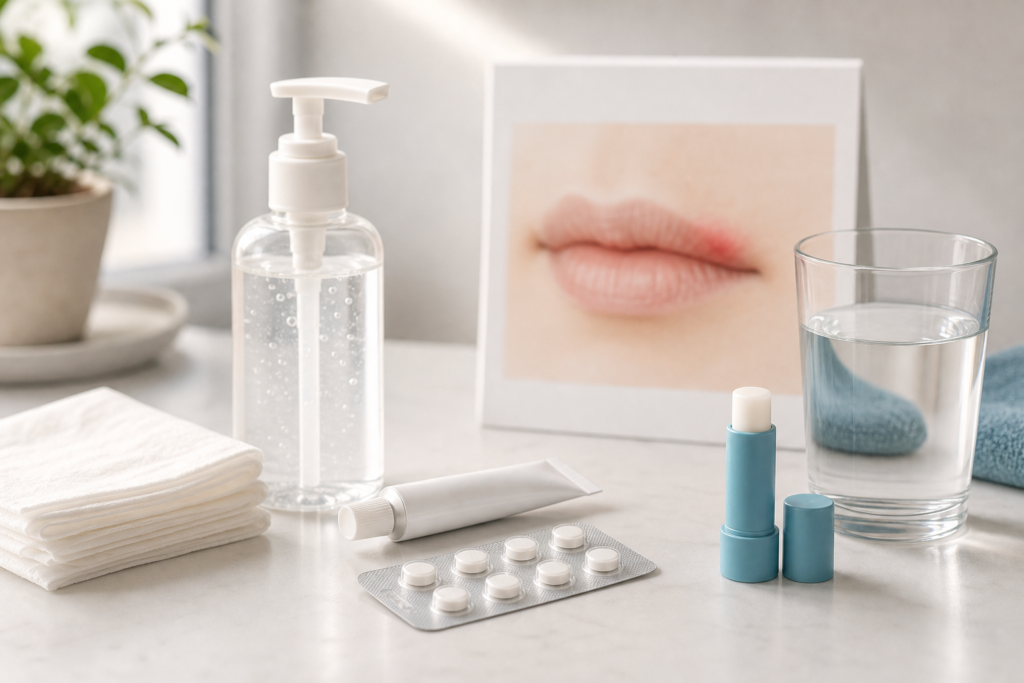
Cold Sores: Causes, Symptoms & Treatment
Medically Reviewed by Dr. Abdul Latif Saad
Cold sores are a common manifestation of herpes simplex virus infection; knowing when to seek care and how treatment options differ can help guide safer decisions.
Cold sores, also called herpes labialis, are most often linked to herpes simplex virus type 1 (HSV-1). HSV infections can persist for life and may reactivate after a period of latency.
Most cold-sore information focuses on recurrent oral disease, but HSV can also cause serious conditions involving the eyes or nervous system. This article separates established evidence from emerging laboratory research. [1][2]
✔ Quick Summary
- ✓ Cold sores are usually associated with HSV-1, a virus that can establish latency in sensory neurons. [1][2]
- ✓ Stress, febrile conditions, ultraviolet-light exposure, and dietary inadequacy are described as possible triggers for recurrent herpes labialis. [2]
- ✓ Topical and systemic antiviral approaches are used for oral HSV infection; treatment choice should reflect the individual clinical situation. [3]
- ✓ Possible eye, neurological, neonatal, widespread, or severe HSV illness needs urgent medical assessment because HSV can cause keratitis, meningitis, encephalitis, and neonatal disease. [1][5][6]
Table of Contents
1. What Is Cold Sores?
Cold sores, or herpes labialis, are an oral or facial manifestation of herpes simplex virus infection and are most commonly associated with HSV-1. HSV-1 is a widespread neurotropic virus that can cause cold sores as well as keratitis, meningitis, and encephalitis. [1][2]
After initial infection, HSV can remain latent in neurons. Reactivation can later lead to recurrent disease, although the frequency and severity of recurrence differ between individuals. [1][2]
HSV has lytic and latent phases: infectious viral particles are produced during lytic replication, whereas latency involves limited viral gene expression and no infectious virus particles. [1]
2. How Does Cold Sores Develop?
HSV-1 initially replicates in epithelial cells of the oronasal mucosa and can enter the peripheral nervous system to establish latency in sensory neurons. During lytic replication, the virus produces viral genomes and proteins that assemble into new virions. [1][6]
Reactivation from latency can produce recurrent herpes labialis. The exact viral and host factors that control latency and reactivation are not completely understood. Immune responses are important in controlling HSV, but they can also contribute to disease processes in some HSV-associated conditions. [1][2]
3. Causes of Cold Sores
The direct cause of cold sores is herpes simplex virus infection, most often HSV-1. HSV-2 can also cause oral HSV infection, although HSV-1 is the virus most commonly associated with herpes labialis in the supplied reviews. Following initial infection, recurrent cold sores result from reactivation of latent virus rather than a new infection in every episode. [1][2][3]
4. Risk Factors
⚠️ Who Is Most at Risk?
A prior HSV infection is necessary for recurrent herpes labialis because the virus must first establish latency. Reviews also describe several possible recurrence triggers. These associations do not mean that every exposure will lead to an outbreak, and an individual trigger may not be clear. [1][2]
Previous HSV-1 infection: HSV can persist in sensory neurons and reactivate after latency. [1][2]
Psychosocial stress: This is described as a potential trigger for reactivation in herpes labialis. [2]
Febrile conditions: Fever or a febrile environment is reported as a possible trigger for recurrent herpes labialis. [2]
Ultraviolet-light susceptibility: Ultraviolet light is listed among factors that may trigger recurrence. [2]
Specific dietary inadequacy: This has been described as a possible reactivation-related factor in a review of herpes labialis. [2]
Immunocompromise: Drug resistance is a particular concern in transplant recipients and other immunocompromised people with HSV infection. [5]
5. Signs & Symptoms
Clinical presentation varies. The supplied reviews identify herpes labialis as a recurrent manifestation of HSV infection but do not provide a detailed symptom-by-symptom diagnostic list. Any unusual, severe, or non-healing oral or facial lesion warrants clinical assessment.
- Recurrent oral or facial lesions: Herpes labialis is a recurrent clinical manifestation associated primarily with HSV-1. [2][3]
- Localized cold sores: Cold sores are a recognized manifestation of HSV-1 infection. [1][6]
- Episodes after a latent period: Symptoms can recur when latent HSV reactivates in sensory neurons. [1][2]
- Symptoms occurring after possible triggers: Some people report outbreaks in association with stress, febrile conditions, ultraviolet light, or dietary inadequacy. [2]
- Eye involvement: HSV can cause keratitis, a potentially serious condition distinct from uncomplicated herpes labialis. [1][6]
- Neurological illness: HSV can cause meningitis or encephalitis, which require urgent medical evaluation. [1][6]
6. How Is Cold Sores Diagnosed?
The supplied source material does not describe a formal diagnostic algorithm or a single confirmatory test for uncomplicated cold sores. It does establish that herpes labialis is a clinical manifestation of HSV infection and that HSV may also cause more serious disease at other sites. A healthcare professional should assess atypical, severe, recurrent, widespread, eye-related, neurological, neonatal, or immunocompromised presentations. [1][2][5][6]
- Clinical assessment: A clinician considers whether the oral or facial presentation is consistent with herpes labialis and reviews the recurrence history.
- Risk assessment: Immune status and symptoms suggesting eye, neurological, or neonatal HSV disease can change the urgency and scope of evaluation. [1][5][6]
- Site-specific evaluation: Suspected keratitis, meningitis, or encephalitis requires assessment appropriate to the affected organ system rather than routine cold-sore care. [1][6]
The supplied evidence does not identify a universal confirmatory or gold-standard investigation for uncomplicated herpes labialis. Testing decisions should be made by a clinician when the presentation is uncertain, atypical, severe, or suggests complications.
7. Differential Diagnosis
🔎 Conditions That Can Look Similar
Many oral and facial conditions can resemble a cold sore. However, the supplied abstracts and reviews do not provide an evidence-based list of specific alternative diagnoses or distinguishing clinical features. A clinician should evaluate lesions that are atypical, persistent, severe, or diagnostically uncertain.
8. Treatment Options
Treatment depends on whether infection is localized or recurrent and on the person’s clinical circumstances. The supplied systematic review describes topical and systemic approaches as complementary: topical options primarily target local symptoms and lesion duration, while systemic antivirals may be used for lesion resolution and recurrence prevention. [3]
🏥 A. First-Line (Gold Standard) Treatment
Antiviral therapy is described as the core treatment approach for HSV-1 infections. Choice of topical or systemic treatment should be clinician-directed and tailored to the location, recurrence pattern, severity, and risk profile of the infection. [3][6]
💊 B. Pharmacological Therapies
- Topical acyclovir cream and docosanol: These topical approaches are reviewed for oral HSV infection and primarily reduce lesion duration and local symptoms when applied early. [3]
- Systemic acyclovir, valacyclovir, and famciclovir: These systemic antivirals are described for episodic and suppressive HSV management, including recurrence prevention. [3][5]
- Antimicrobial photodynamic therapy: A 2026 systematic review found possible benefit as an adjunct to antiviral treatment, but further high-quality studies are needed to clarify protocols and clinical benefit. [4]
🏠 C. Supportive & Lifestyle Management
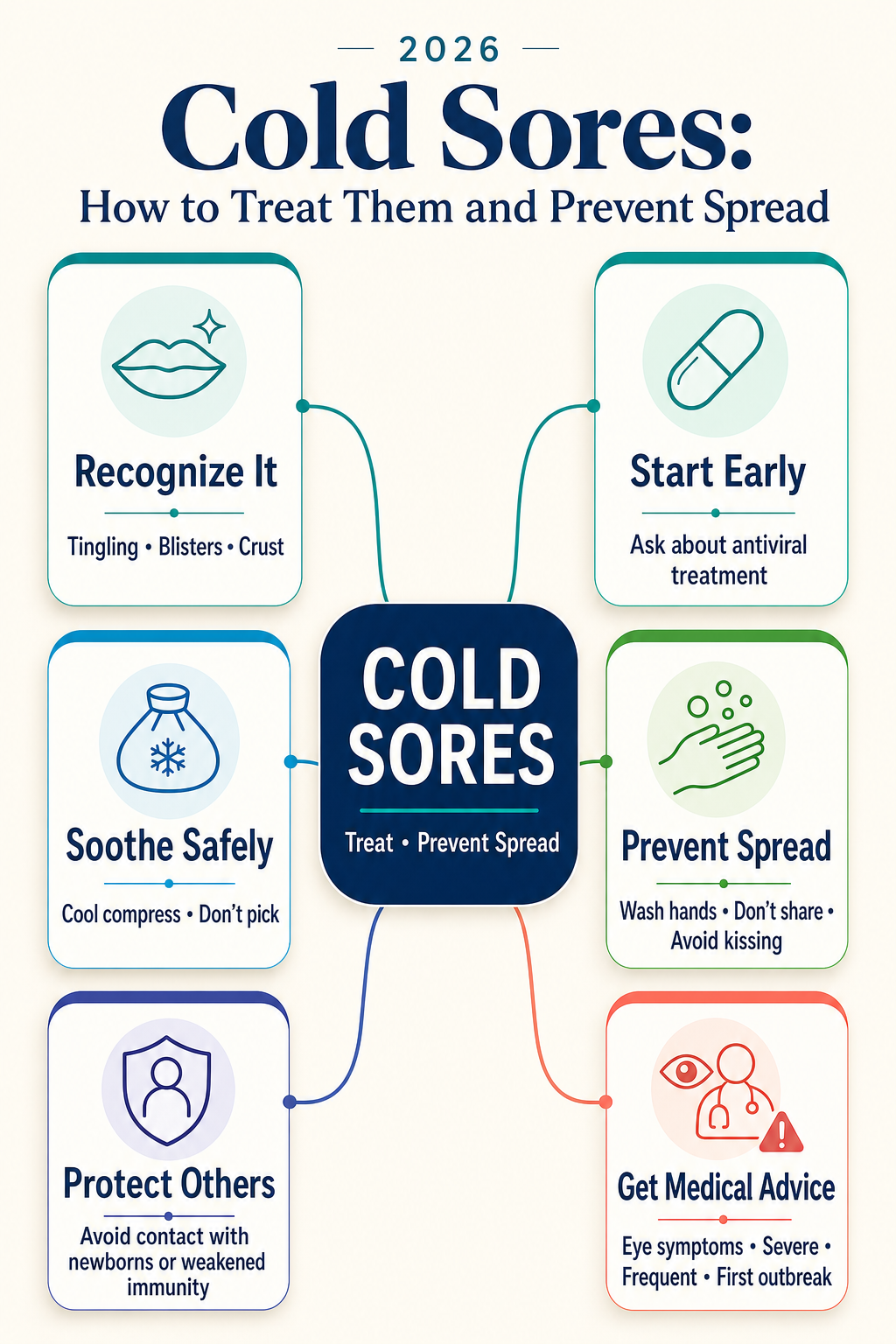
The supplied evidence identifies stress, febrile conditions, ultraviolet-light susceptibility, and dietary inadequacy as possible recurrence-related factors. If a pattern is noticed, discuss it with a healthcare professional. Seek medical advice rather than relying on self-care alone for severe, frequent, unusual, eye-related, neurological, neonatal, or immunocompromised presentations. [2][5][6]
📚 9. Evidence in Context
The supplied reviews support the use of topical and systemic antiviral approaches for oral HSV infection, while emphasizing different roles for local treatment and systemic therapy. [3][6] A 2026 systematic review suggests antimicrobial photodynamic therapy may be useful alongside antivirals, but calls for higher-quality studies and clearer protocols. [4] Adibelivir showed antiviral activity and synergy with established antivirals in cell culture, but this laboratory evidence does not establish it as routine treatment for cold sores. [5] The supplied material contains no clinical guideline, so no guideline recommendation can be independently summarized here. Research on HSV cellular biology and nervous-system effects should not be interpreted as proof that ordinary cold sores cause neurodegenerative disease. [1][6]
10. When to Seek Emergency Medical Help
• You may have HSV-related eye disease or a clinician has raised concern for keratitis, which can threaten vision. [1][6]
• You may have meningitis, encephalitis, or another acute neurological illness. HSV encephalitis can be life-threatening. [1][6]
• A newborn may have HSV infection, because neonatal herpes can be life-threatening. [5]
• HSV lesions are widespread or severe, particularly in a person who is immunocompromised or a transplant recipient. [5]
• You feel seriously unwell or are concerned that an outbreak is not behaving like your usual cold sore.
11. Frequently Asked Questions (FAQ)
Q Can cold sores come back after they heal?
Yes. HSV can establish latency in sensory neurons, and reactivation can cause recurrent herpes labialis. The mechanisms controlling latency and reactivation are not completely understood. [1][2]
Q Which treatments are used for oral HSV infection?
The supplied systematic review describes topical options, including acyclovir cream and docosanol, and systemic antivirals, including acyclovir, valacyclovir, and famciclovir. A clinician can help determine whether treatment is appropriate and which approach fits the situation. [3]
Q Are new treatments being studied?
Yes. Antimicrobial photodynamic therapy has been studied as an adjunct to antiviral therapy, but stronger studies are needed. Adibelivir is also under clinical development; available evidence in the supplied material is from cell-culture testing and does not establish routine use for cold sores. [4][5]
References
- Zhu S, Viejo-Borbolla A, Pathogenesis and virulence of herpes simplex virus, Virulence, 2021. Source
- Gopinath D et al., A Comprehensive Overview of Epidemiology, Pathogenesis and the Management of Herpes Labialis, Viruses, 2023. Source
- Mancini A et al., Topical and Systemic Therapeutic Approaches in the Treatment of Oral Herpes Simplex Virus Infection: A Systematic Review, International Journal of Molecular Sciences, 2025. Source
- Amiri P et al., Efficacy of anti-microbial photodynamic therapy in managing herpes simplex virus: a systematic review of clinical studies, Photodiagnosis and Photodynamic Therapy, 2026. Source
- Gege C et al., Susceptibility of clinical isolates, laboratory-adapted and drug-resistant herpes simplex virus strains to helicase-primase inhibitor adibelivir (IM-250) and its synergy in combination therapy, Antiviral Research, 2026. Source
- Su D et al., An updated review of HSV-1 infection-associated diseases and treatment, vaccine development, and vector therapy application, Virulence, 2024. Source