

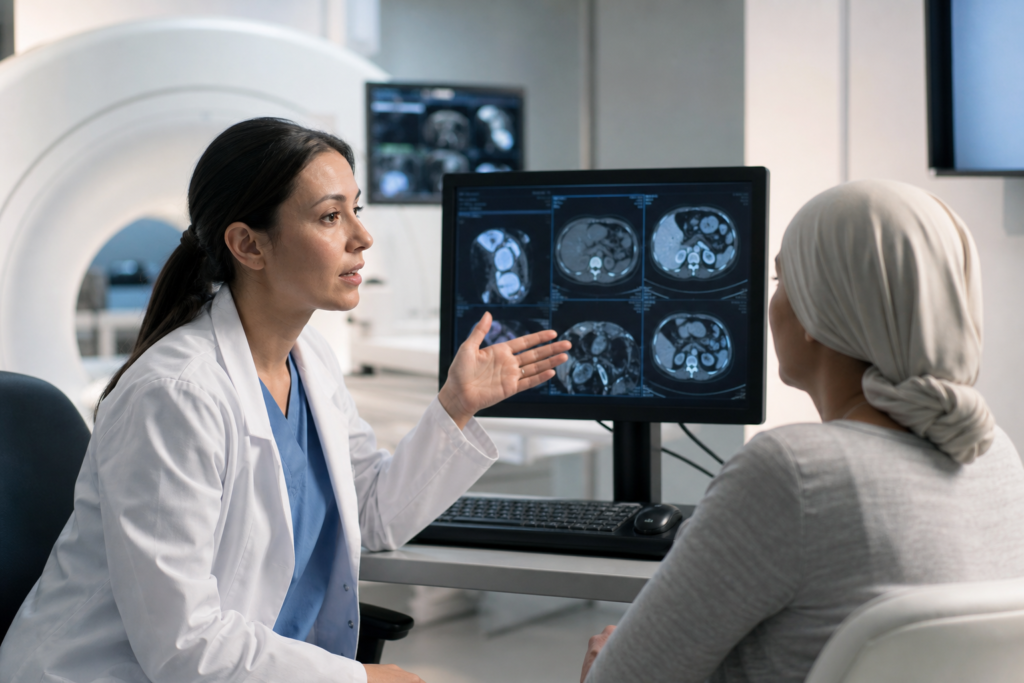
Understanding Cancer: Causes, Symptoms & Treatment
A comprehensive, evidence-based guide to understanding how cancer develops, how it is diagnosed, and what modern treatment options can offer patients and families navigating this complex disease.
Cancer is not a single disease but a broad family of conditions sharing one defining characteristic: abnormal, uncontrolled cell growth. For millions of people worldwide, a cancer diagnosis ranks among the most consequential moments of their lives — yet our understanding of what cancer is, how it behaves, and how it can be treated has advanced substantially. Early detection, genomically guided therapies, and a deeper understanding of tumor biology have collectively transformed oncology.
Whether you are a patient, a caregiver, or simply seeking reliable information, this article walks through the essentials of cancer — from cellular origins to current treatment strategies — grounded in peer-reviewed evidence.
✔ Quick Summary
- ✓ Cancer encompasses more than 100 distinct conditions characterized by uncontrolled cell growth driven by genetic mutations and altered metabolism [6][8][9].
- ✓ Roy and Saikia (2016) state that all cancers are potentially curable if caught early, with surgery, chemotherapy, radiation, and other cancer-specific medications as primary treatment pillars [6].
- ✓ The cancer genome carries a historical record of tumor evolution that can be analyzed to reveal patterns of mutation and selection, informing targeted treatment decisions [8].
- ✓ Immunotherapy combinations and prevention vaccines represent a major frontier, particularly for difficult-to-treat cancers such as pancreatic cancer, though checkpoint blockade alone has not yet demonstrated consistent efficacy in that setting [7].
1. What Is Cancer?
Cancer is a broad family of more than 100 distinct conditions, all sharing one defining characteristic: abnormal, uncontrolled cell growth. Under normal circumstances, the trillions of cells in the human body divide and die in an orderly fashion. When genetic changes — called mutations — disrupt this order, cells can begin to multiply uncontrollably, invading surrounding tissues and potentially spreading to distant organs through a process called metastasis.
Roy and Saikia (2016) describe cancer as one of the most consequential diseases of the modern era, with incidence continuing to rise in the 21st century [6]. From colorectal cancer to breast cancer to pancreatic cancer, the diversity of cancer types reflects the complexity of cellular biology itself.
Breast cancer affects one in seven women worldwide during their lifetime. Widespread mammographic screening programs have enabled detection of the disease during its asymptomatic phase, and the field cancerization concept suggests that molecularly altered peri-tumoral tissue — invisible to routine histopathology — may contribute to local recurrence even after apparently complete surgical resection [10].
2. How Does Cancer Develop?
Cancer development begins at the genomic level. Over time — due to environmental exposures, inherited errors, or the random errors inherent to cell division — certain instructions in the genome become corrupted. These corrupted instructions are somatic mutations. When they accumulate in genes that promote cell growth (proto-oncogenes) or genes that normally suppress tumor development (tumor suppressor genes), the balance tips toward uncontrolled proliferation.
Research published in the Journal of Pathology has illuminated a key concept: the cancer genome itself carries a historical record of how the tumor evolved. By analyzing genomic data, scientists can reconstruct the temporal history of mutation and selection within a tumor — revealing patterns of both selective (Darwinian) and neutral evolution [8]. Importantly, Graham and Sottoriva (2017) note that this knowledge is largely derived from cross-sectional analysis at a single time point rather than longitudinal observation, because it is impractical to observe tumors unperturbed by treatment over time — meaning evolutionary inferences remain inherently indirect [8].
Altered cell metabolism is another recognized feature of cancer development. Kroemer and Pouyssegur (2008) describe how the hallmarks of cancer are deeply intertwined with reprogrammed cellular metabolism [9]. Cancer cells often preferentially generate energy through aerobic glycolysis — the Warburg effect — even in the presence of oxygen. Additionally, the resistance of cancer mitochondria to apoptosis-associated permeabilization and the constitutive activation of signaling cascades that stimulate cell growth have a profound impact on anabolic metabolism. These metabolic peculiarities may represent exploitable vulnerabilities for cancer treatment [9].
The concept of field cancerization offers further insight into tumor origins. Rather than a tumor arising in isolation, this theory proposes that cancers develop from a field of molecularly altered cells that create a permissive environment for malignant evolution — which can occur with or without morphological changes visible to routine histopathology [10]. This explains, for example, why breast cancer patients recur at a rate of up to 15% within the first 10 years post-surgery even when surgical margins appear histologically normal, as the surrounding peri-tumoral tissue itself may harbor distinct molecular aberrations [10].
3. Causes of Cancer
Cancer typically arises from an interplay of genetic vulnerabilities, environmental exposures, and lifestyle factors that accumulate over years or decades. Understanding these contributing causes is foundational to prevention and early intervention.
Foodborne chemical exposures represent an underappreciated contributor to global cancer burden. WHO estimates published in the Lancet Global Health document that nine foodborne chemicals — including aflatoxins B1 and M1, inorganic arsenic, lead, methylmercury, cadmium, and dioxin — caused an estimated 1.12 million (95% uncertainty interval 0.40–2.10 million) deaths and 29.8 million (12.9–53.1 million) disability-adjusted life-years (DALYs) globally in 2021 [2]. Aflatoxin B1 is a well-recognized hepatic carcinogen. The authors emphasize that an integrated response combining non-communicable disease prevention with food safety regulation is essential, and that granular subnational exposure assessment is needed to ensure equity [2].
⚠️ Who Is Most at Risk?
Certain factors significantly elevate an individual’s likelihood of developing cancer. Some risk factors are modifiable through lifestyle changes; others, such as inherited gene variants, are not. Awareness of these risk factors supports informed screening and prevention decisions.
Advancing Age: Most cancers develop in individuals of older age. The cumulative accumulation of somatic mutations over decades of cell division increases the probability of oncogenic change [8].
Inherited Genetic Mutations: Variants in genes such as BRCA1 and BRCA2 substantially increase risk for breast, ovarian, and other cancers. Field cancerization research further suggests that molecular risk may extend beyond the primary tumor into surrounding peri-tumoral tissues [10].
Dietary Exposures to Chemical Carcinogens: Chronic consumption of foods contaminated with aflatoxins, inorganic arsenic, or dioxins contributes to hepatic, bladder, and other cancers. The global burden of these exposures has been quantified by WHO, with the greatest DALY rate estimated for the South-East Asia region [2].
Immunosuppression: A compromised immune system reduces the body’s capacity to identify and destroy early malignant cells. Pancreatic cancer, for instance, exploits an immunosuppressive tumor microenvironment and poor T-cell infiltration to evade immune surveillance [7].
Tobacco & Alcohol Use: Tobacco use is among the largest preventable causes of cancer globally, associated with lung, oral, esophageal, bladder, and other cancers. Alcohol consumption is independently associated with cancers of the liver, breast, and gastrointestinal tract, as recognized by international cancer research bodies.
Chronic Infections: Certain viruses and bacteria are established carcinogens — including hepatitis B and C viruses (liver cancer), human papillomavirus (cervical cancer), and Helicobacter pylori (gastric cancer), as classified by WHO and the International Agency for Research on Cancer.
Metabolic Dysregulation: Altered cancer cell metabolism — including constitutive activation of growth-stimulating signaling cascades and reprogrammed anabolic metabolism — is both a consequence of and a contributor to cancer progression [9].
4. Signs & Symptoms
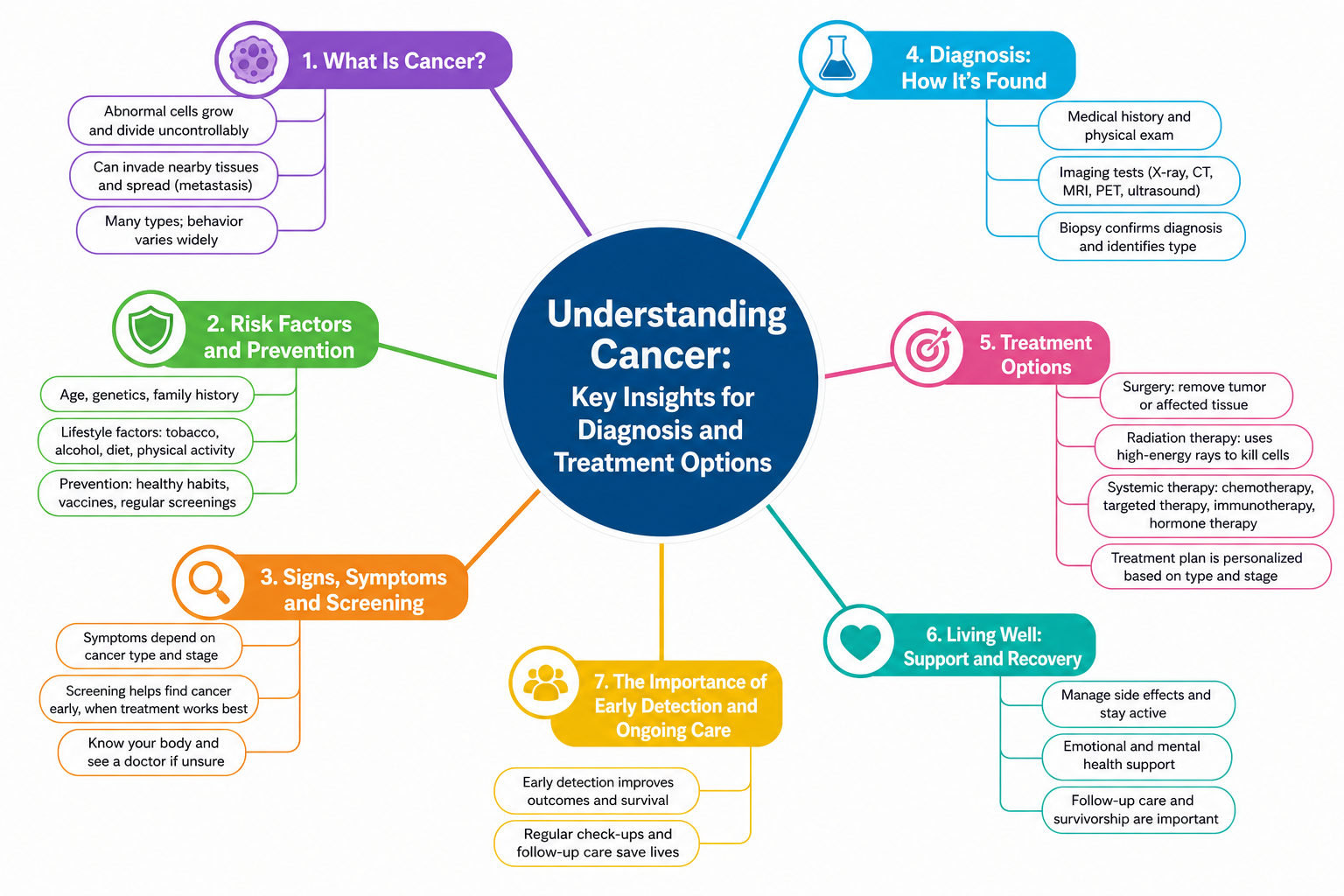
Cancer symptoms vary depending on the type, location, and stage of the disease. The following warning signs are common across many cancer types and should prompt clinical evaluation:
Unexplained Weight Loss: Significant, unintentional weight loss can occur because cancer cells reprogram normal metabolism and alter the body’s energy demands, or because tumors interfere with digestion and nutrient absorption [9].
Persistent Fatigue: Cancer-related fatigue does not resolve with rest and is driven by systemic inflammation, metabolic disruption, and sometimes anemia caused by the malignancy or its treatment.
Unexplained Lumps or Masses: A new or growing lump — particularly in the breast, lymph nodes, or soft tissue — may represent a tumor mass and warrants prompt clinical evaluation. Even histologically normal-appearing tissue adjacent to a mass may harbor molecular abnormalities consistent with field cancerization [10].
Changes in Bowel or Bladder Habits: Persistent diarrhea, constipation, rectal bleeding, or blood in the urine may indicate colorectal, bladder, or other gastrointestinal cancers. Endoscopic evaluation is often critical in such cases [4].
Persistent Pain: Bone pain, headaches, or abdominal pain that does not resolve with conventional treatment may reflect tumor invasion of surrounding structures or nerve involvement.
Skin Changes: Jaundice (yellowing of the skin and eyes), unusual pigmentation, or a sore that does not heal may signal liver, skin, or other cancers.
Persistent Cough or Hoarseness: A cough that does not resolve, or a change in voice quality, may reflect tumors affecting the respiratory tract, larynx, or thyroid.
Difficulty Swallowing: Dysphagia can be a symptom of esophageal, throat, or stomach cancers, particularly when accompanied by unexplained weight loss.
5. How Is Cancer Diagnosed?
🔬 Differential Diagnosis & Investigations
Diagnosing cancer requires a systematic approach because many of its symptoms overlap with benign conditions. A thorough clinical history, physical examination, laboratory tests, and imaging studies are combined with histopathological examination of tissue — the gold standard for most cancers. Endoscopic techniques have expanded diagnostic and therapeutic reach significantly, particularly for gastrointestinal malignancies [4][5].
The definitive diagnosis of cancer requires histopathological examination — microscopic analysis of tissue obtained by biopsy or surgical resection. For gastrointestinal cancers, endoscopic full-thickness resection (EFTR) using the Full-Thickness Resection Device (FTRD) can simultaneously diagnose and treat lesions; a multicenter study across 13 centers in Australia and New Zealand reported technical success in 89% of cases and an R0 resection rate of 79% for complex colorectal lesions, with adenocarcinoma confirmed in 23% of resected specimens [4]. For duodenal ampullary tumors, endoscopic papillectomy followed by histological margin assessment determines the need for additional treatment — with pathological residual adenocarcinoma in selected cases showing no disease progression during follow-up observation, while endoscopic residuals with confirmed adenocarcinoma required further intervention [5]. Genomic profiling of tumor tissue is increasingly used alongside histopathology to characterize a cancer’s evolutionary trajectory and guide targeted therapy [8].
6. Treatment Options
Roy and Saikia (2016) state that all cancers are potentially curable if caught early enough, with cancer cells eliminated through one of four mechanisms: surgical removal, chemotherapy or other cancer-specific medications, radiation therapy, or spontaneous regression [6]. Modern oncology builds on these pillars with expanding precision approaches guided by each tumor’s specific biology.
🏢 A. Surgical Resection
Surgical removal of the cancerous mass remains the most definitive treatment for most solid tumors detected at a localized stage [6]. Minimally invasive endoscopic approaches are increasingly available for gastrointestinal cancers. Colorectal EFTR using the FTRD achieved technical success in 89% of cases across 13 centers in Australia and New Zealand, with an R0 resection rate of 79%. Adverse events occurred in 4.1% of cases early and 12.9% in delayed fashion, including post-procedural bleeding (n=11), perforation (n=5), and appendicitis in 17% of procedures involving the appendiceal orifice — underscoring the importance of careful patient selection [4]. For duodenal ampullary tumors, endoscopic papillectomy is an established approach, with additional surgical intervention reserved for cases with confirmed endoscopic residual disease; pathological residuals without endoscopic evidence of residual tumor may be observed in selected cases with caution [5].
💊 B. Pharmacological & Systemic Therapies
- Chemotherapy: Cytotoxic agents target rapidly dividing cells and remain a backbone of systemic cancer treatment for many tumor types, identified by Roy and Saikia as a primary mechanism of cancer cell elimination [6].
- Immunotherapy & Checkpoint Blockade: Morrison, Byrne, and Vonderheide (2018) highlight that checkpoint blockade and engineered T-cell therapies have not yet demonstrated consistent efficacy in pancreatic cancer, partly due to its immunosuppressive microenvironment, poor T-cell infiltration, and low mutational burden. However, a growing body of evidence suggests that orthogonal combinations of these and other strategies could unlock immunotherapy’s potential in pancreatic and other cancers [7].
- Cancer Prevention Vaccines: Morrison et al. (2018) discuss the development of prevention vaccines targeting pancreatic cancer as a promising research roadmap that could shift oncology toward genuine prevention [7].
- Metabolic Targeting: Kroemer and Pouyssegur (2008) propose that the altered metabolism of cancer cells — particularly their reliance on aerobic glycolysis, resistance of cancer mitochondria to apoptosis-associated permeabilization, and constitutive activation of growth-stimulating signaling cascades — represents a potential therapeutic vulnerability. Strategies targeting metabolic reprogramming remain an active area of research [9].
- Hormonal Therapy: For hormone-sensitive cancers such as breast and prostate cancer, therapies that block or reduce sex hormone signaling are effective systemic treatments recognized by established oncology guidelines.
⚡ C. Radiation Therapy
Radiation therapy uses high-energy rays or particles to damage the DNA of cancer cells, preventing their division. It is identified by Roy and Saikia (2016) as one of the four established pillars of cancer treatment [6]. It may be used as a primary treatment for localized tumors or as adjuvant therapy following surgery. Modern techniques such as intensity-modulated radiation therapy (IMRT) and stereotactic radiosurgery allow precise targeting to minimize damage to surrounding healthy tissue.
🏠 D. Supportive & Lifestyle Management
Cancer treatment extends beyond the clinic. Nutritional support, psychological counseling, palliative care, and patient advocacy networks play an important role in outcomes and quality of life. Ralston et al. (2027) describe the critical importance of integrating lived patient experience into global health systems, citing cancer survivor organizations including Cancer Survivors’ Quest in Malawi and Pink Hearts Cancer Support Foundation in Kenya as examples of patient-led initiatives that should be central — not peripheral — to health architecture reform [1]. Smoking cessation, reduction of alcohol intake, and avoidance of known dietary carcinogens — including aflatoxin-contaminated foods, which carry a documented global disease burden [2] — contribute to reducing recurrence risk and improving overall wellbeing.
📚 Evidence in Context
The evidence base for cancer management has expanded substantially, but important limitations remain. Graham and Sottoriva (2017) note that our understanding of cancer evolution derives primarily from cross-sectional tumor analysis at a single time point rather than longitudinal observation — making evolutionary inferences inherently indirect [8]. For immunotherapy in pancreatic cancer, Morrison et al. (2018) acknowledge that checkpoint blockade has not yet demonstrated reliable clinical efficacy in that setting, and that effective strategies will likely require combinations targeting multiple aspects of the immunosuppressive tumor microenvironment [7]. In gastrointestinal endoscopy, multicenter EFTR data from McGarrigle et al. report meaningful adverse event rates — including appendicitis in 17% of procedures involving the appendiceal orifice — reinforcing that careful patient selection and risk stratification are essential for optimizing outcomes [4]. In the management of ampullary tumors after endoscopic papillectomy, Kurita et al. found that some pathological residuals showed no disease progression, suggesting possible complete eradication by the primary procedure, but endoscopic residuals with adenocarcinoma required further intervention — highlighting that follow-up observation requires caution in selected cases only [5]. The global burden of foodborne chemical carcinogens documented by the WHO Foodborne Disease Burden Epidemiology Reference Group highlights that dietary exposures — particularly aflatoxins and inorganic arsenic — remain underappreciated contributors to cancer burden, especially in low- and middle-income settings [2]. Patients should always discuss diagnosis and treatment options with a qualified oncologist; established WHO and national clinical guidelines remain the reference standard for clinical decision-making.
8. When to Seek Urgent Medical Help
• You experience sudden, severe, unexplained pain that does not resolve.
• You notice a rapidly enlarging lump or mass anywhere in your body.
• You have unexplained, persistent bleeding or bruising.
• You experience shortness of breath, sudden chest pain, or difficulty breathing.
• You develop a high fever, especially if you are currently undergoing chemotherapy or immunotherapy (which can lead to febrile neutropenia, a medical emergency).
9. Frequently Asked Questions
References
- Ralston, et al. (2027). *Patient advocacy and lived experience in global health architecture reform.*
- WHO Foodborne Disease Burden Epidemiology Reference Group. (2021). *Global burden of foodborne chemical carcinogens.* Lancet Global Health.
- Case report on disseminated strongyloidiasis mimicking IBD/CDI. *Journal of Clinical Parasitology.*
- McGarrigle, et al. *Multicenter study on endoscopic full-thickness resection (EFTR).* Australian and New Zealand Clinical Cohort.
- Kurita, et al. *Endoscopic papillectomy and margins assessment for ampullary tumors.*
- Roy & Saikia. (2016). *Cancer in the 21st century: Epidemiology, biology, and treatments.*
- Morrison, Byrne, & Vonderheide. (2018). *Immunotherapy roadmaps and vaccine models in pancreatic cancer.*
- Graham & Sottoriva. (2017). *Cancer genomes, tumor evolution trajectories, and evolutionary selection.* Journal of Pathology.
- Kroemer & Pouyssegur. (2008). *Metabolic reprogramming, aerobic glycolysis, and apoptosis resistance in cancer.*
- Molecular field cancerization aberrations in breast cancer. *Journal of Surgical Oncology.*